Success message
Error message

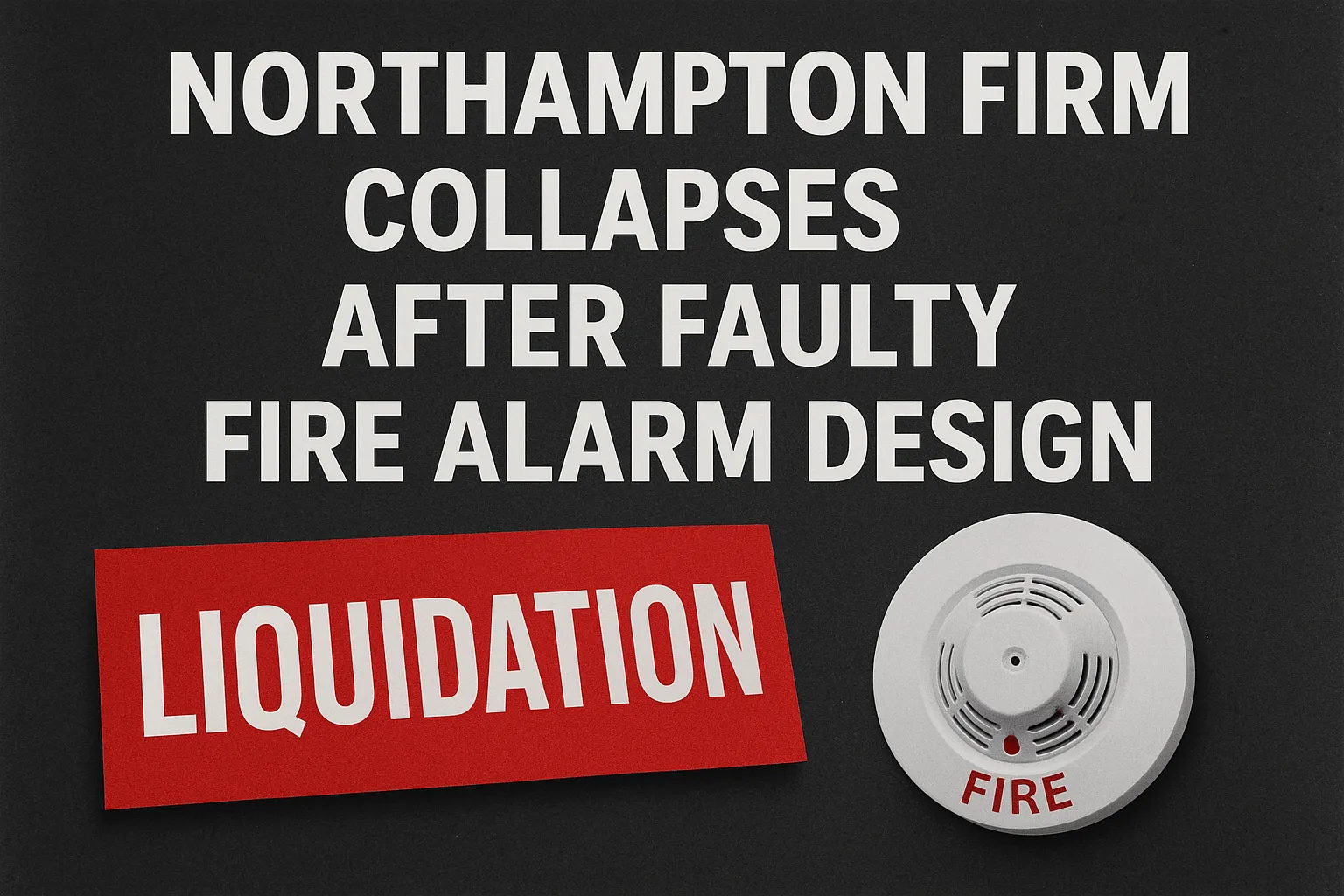
A construction company with a £20 million annual turnover was forced into liquidation — not because of poor business performance, but due to serious shortcomings in its fire detection, alarm systems, and overall fire strategy. The financial penalties were severe, but the damage to reputation was far worse. It’s a stark reminder that non-compliance in fire safety can bring down even the most established organisations.
Fire safety isn’t just about passing inspections — it’s about designing resilience into the very fabric of a building.
I still remember when Notifier BDM first introduced me to Notifier Self-Test. I was instantly intrigued — and, to be honest, impressed. Here was a technology that could completely reshape how we approach system testing and compliance.
Even though Notifier Self-Test has been around since 2021, it remains a game changer in the fire safety industry today. The technology represents a shift from reactive, labour-intensive maintenance to proactive, intelligent system verification — giving engineers, building owners, and occupants alike greater confidence in their safety systems.
Notifier Self-Test allows fire detectors to perform their own functional checks, ensuring every device is operational, compliant, and ready to respond in an emergency — all with minimal human intervention.
Why it matters:
Efficiency and safety combined: A single technician can test an entire 50-detector system in roughly 40 minutes.
Continuous protection: The system remains fully operational throughout the test — if a fire occurs, the alarm still activates instantly.
Reduced disruption: Only a short visual check of each detector is required, reducing intrusion into occupied spaces.
Access solved: Hard-to-reach detectors no longer pose logistical or safety challenges.
Instant digital compliance: Automated reports are generated through the Connected Life Safety Services (CLSS) app, confirming every device’s status and compliance within minutes.
For environments like student housing, social housing, hospitals, and offices, where safety, accessibility, and uptime are critical, Notifier Self-Test continues to redefine what effective fire safety looks like.
Technology alone can’t guarantee safety. The downfall of that £20 million company wasn’t caused by a lack of equipment — it was a failure in design, understanding, and strategic execution.
A robust fire safety design ensures that technology, installation, and maintenance all align with British Standards, operational realities, and future compliance needs. It’s about foresight — not just following regulations, but anticipating risk before it manifests.
At LFS, we know that the industry’s strength lies in its professionals. That’s why we deliver the BAFE-approved Level 3 Qualification (EAL) — a program designed to equip engineers with the skills and knowledge needed to design, install, commission, and maintain fire detection and alarm systems to the highest standards.
It’s more than a certification — it’s a step toward building a future where every system is designed with confidence, tested with intelligence, and maintained with purpose.
Fire safety isn’t just compliance — it’s commitment.
Empower yourself and your team with the right expertise to create safer, smarter buildings. Enroll in the LFS BAFE Level 3 Qualification (EAL) today and join the professionals leading the future of fire safety design.
References BBC. (2019, September). Why three companies were fined £670,000 after a fire safety failure in Leeds. BBC News. Retrieved from https://www.bbc.co.uk/news/uk-england-leeds-51358802 Honeywell. (2021, May 5). Why Your Facility Needs the NOTIFIER Self-Test Series of Detectors. Retrieved from https://www.honeywell.com/us/en/news/featured-stories/2021/05/notifier-self-test-series-detectors