Success message
Error message

The story of Peter, a fire alarm installation engineer with three years of experience, begins with his transition to a new role as a fire alarm service engineer. Confident in his belief that modern technology has made traditional circuit knowledge obsolete, he quickly discovers the reality is far more complex.
This story explains how understanding normally closed (NC) and normally open (NO) is fundamental to his new job, regardless of technological advancements.
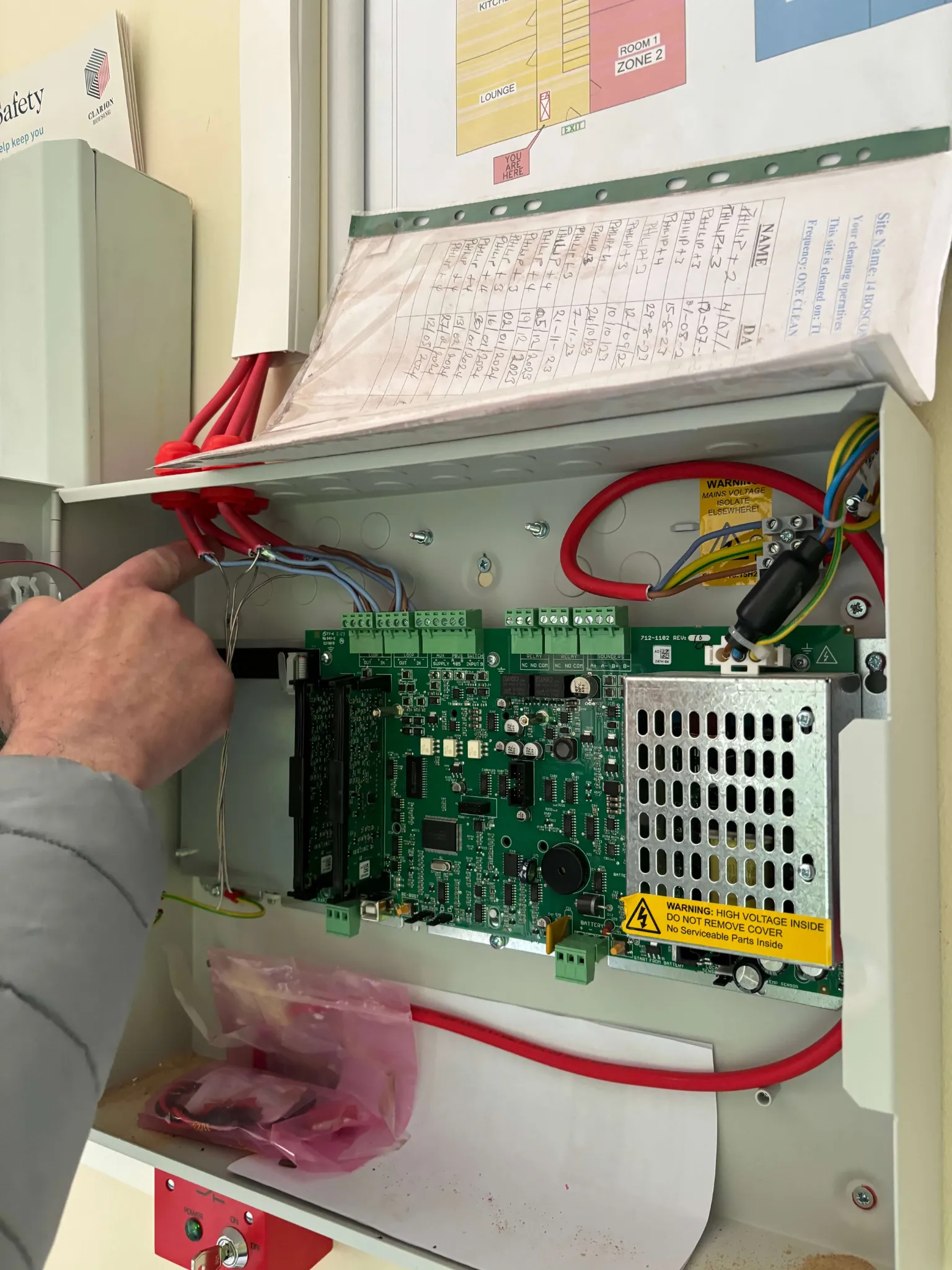
Every fire alarm system communicates through circuits, a basic language of "on" and "off." This simple yet critical communication ensures the system’s reliability and effectiveness.
Imagine a security guard who is always on duty. This is a normally closed (NC) circuit. In its normal state, the electrical path is complete, and current flows without interruption. When an event occurs—a wire is cut, a device activates, or a component fails—the circuit opens, and the current stops. This break in the circuit is immediately detected by the fire alarm control panel (FACP) as a signal, indicating either a fault or an alarm. This design is crucial for supervision because it ensures that a problem with the wiring or a device will always be detected.
NC circuits are used for:
Detection: Smoke and heat detectors, manual call points.
Supervision: Tamper switches on sprinkler systems, which open if a valve is tampered with.
Now, think of a powerful switch waiting for a command. This is a normally open (NO) circuit. In its normal state, the electrical path is broken, and no current flows. The circuit remains inactive until an event, like a fire alarm, causes it to close. This closure completes the circuit, allowing current to flow and activating a connected device.
NO circuits are used for:
Control and Action: Activating devices in response to a fire alarm.
Signaling: Sounders, strobes, and beacons that are activated via relay modules.
Integration: Relays that shut down HVAC systems, recall elevators to a safe floor, or release magnetic locks on doors.
Peter’s confusion was cleared up when he realized that fire alarm systems rarely operate in isolation. They are designed to integrate with other building systems for comprehensive life safety. This integration is where the importance of NC and NO circuits becomes most apparent.
Sprinkler Systems: Flow switches and valve tamper switches on a sprinkler system use NC circuits. If water flows or a valve is closed, the circuit opens, alerting the FACP.
HVAC and Elevators: To shut down a fan or recall an elevator, the FACP sends a signal to an NO relay, which closes the circuit to activate the connected equipment.
Access Control: The system can use an NO contact to release magnetic door locks during an emergency, while an NC contact can be used to monitor the door's status.
In the end, Peter learned that while technology evolves, the fundamental principles of fire safety remain the same. Understanding NC and NO circuits is not just about troubleshooting; it's about speaking the core language of fire protection, ensuring that every component of a building’s life safety system works together seamlessly to protect lives and property.
If you're looking to gain the essential insights needed for fire alarm servicing, our hands-on Fire Alarm Installation Course is the perfect place to start. Don't just install—understand the fundamentals that make you a true expert.
Click here to learn more about the course and secure your spot today!