Success message
Error message

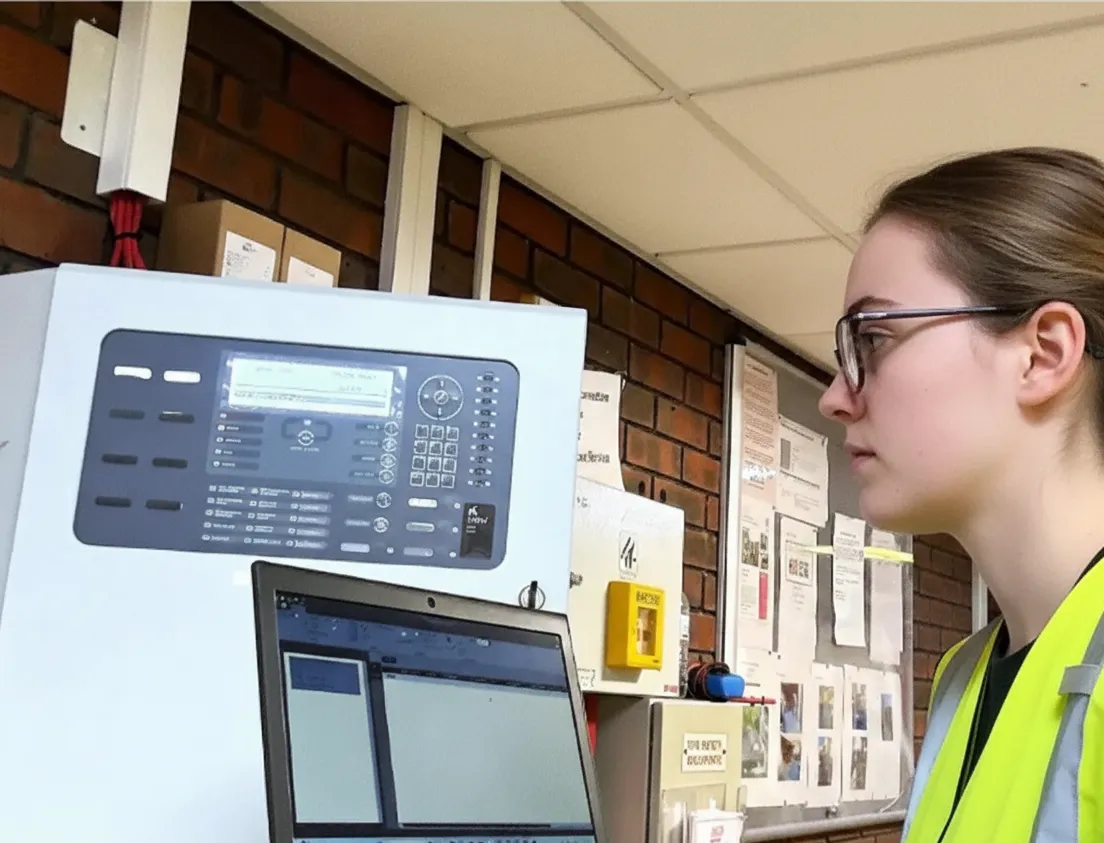
In the lifecycle of a Fire Detection and Alarm (FD&A) system, the transition from installation to operation is the most critical phase. Yet, in the rush to meet handover deadlines, commissioning is frequently misunderstood as a mere "function test." For the experienced engineer, commissioning is the final line of defence—the rigorous process that ensures a design on paper translates into a life-saving reality.
Under BS 5839-1:2025, the stakes have never been higher. Correct commissioning isn't just a technical preference; it is the benchmark for legal compliance.
True commissioning is an exhaustive verification process. It is the point where an engineer takes ownership of the system’s integrity. Key stages include:
Integrity Testing: Beyond checking if a detector "reds up," engineers must verify sound pressure levels (dB) across the site and ensure the cause-and-effect matrix operates exactly as the fire strategy dictates.
Technical Verification: Ensuring that the wiring, battery calculations, and loop loadings meet the specific requirements of the UK code of practice.
Environmental Assessment: Identifying potential "false alarm" triggers—such as poorly placed detectors near HVAC vents or kitchens—before the building is occupied.
When commissioning is rushed or treated as a "snagging" exercise, the consequences are felt long after the engineer leaves the site:
Unwanted Fire Signals (UwFS): Poorly calibrated systems lead to false alarms, which desensitise occupants and place unnecessary strain on Fire and Rescue Services.
Design Gaps: Without a thorough commissioning engineer, design errors (like missed coverage in a void) go undetected until it is too late.
Legal Liability: If a system fails during a real fire event, the commissioning certificate is the first document investigators will scrutinise. If the testing wasn't exhaustive, the engineer and the firm are exposed.
A system is not "commissioned" until the paperwork is complete. For a compliant handover, the following must be provided to the Responsible Person (RP):
G7 Commissioning Certificate: Signed and verified.
As-fitted Drawings: Reflecting the exact final state of the system.
Operation & Maintenance (O&M) Manuals: Clear instructions for the end-user.
Logbook: To ensure the system's ongoing maintenance is recorded from day one.
For experienced engineers, "knowing" how a system works isn't the same as being "competent" in the eyes of the law. As the industry moves toward stricter accreditation, formalising your expertise is essential.
At LFS, we provide the EAL Level 3 Award in Commissioning and Handover of Fire Detection & Alarm Systems. This course is tailored for professionals who want to master the complexities of BS 5839-1.
Master the Matrix: Gain total confidence in programming and testing complex cause-and-effect scenarios.
Documentation Excellence: Learn how to produce handover packs that stand up to any audit.
Career Progression: Prove your status as a "Competent Person" in a high-stakes industry.
Don't just install systems—commission them with authority.