Success message
Error message

Gain industry-wide recognition with this comprehensive qualification, built in collaboration with sector experts to certify your skills in fire and security. This program serves as a definitive professional bridge for both apprentices and experienced workers. Choose your focus from two specialist streams: Fire Detection and Alarm Systems or Electronic Security Systems (CCTV, Intruder, and Access Control).
Prerequisites: Learners must be working in the industry to gather the required workplace evidence for their Portfolio of Evidence.
Don't miss out! View our upcoming course start dates and book now
EAL Level 3 NVQ Diploma: £1,595.00 + VAT
BS 5839-1:2025 Compliance: £1,075.00 + VAT
Get the full package and save £200.00! > Includes both the Level 3 NVQ Diploma and the BS 5839-1:2025 course.
Secure both the EAL Level 3 NVQ Diploma and the BS 5839-1:2025 Compliance Course for a combined price of £2,000.00 + VAT. This all-in-one package provides the essential qualifications for industry recognition and technical compliance in a single, cost-effective bundle.
Please Note: All bookings and course enrollments are subject to our standard terms and conditions. For full details on our policies, including cancellations and eligibility, please refer to our page. Terms & Conditions
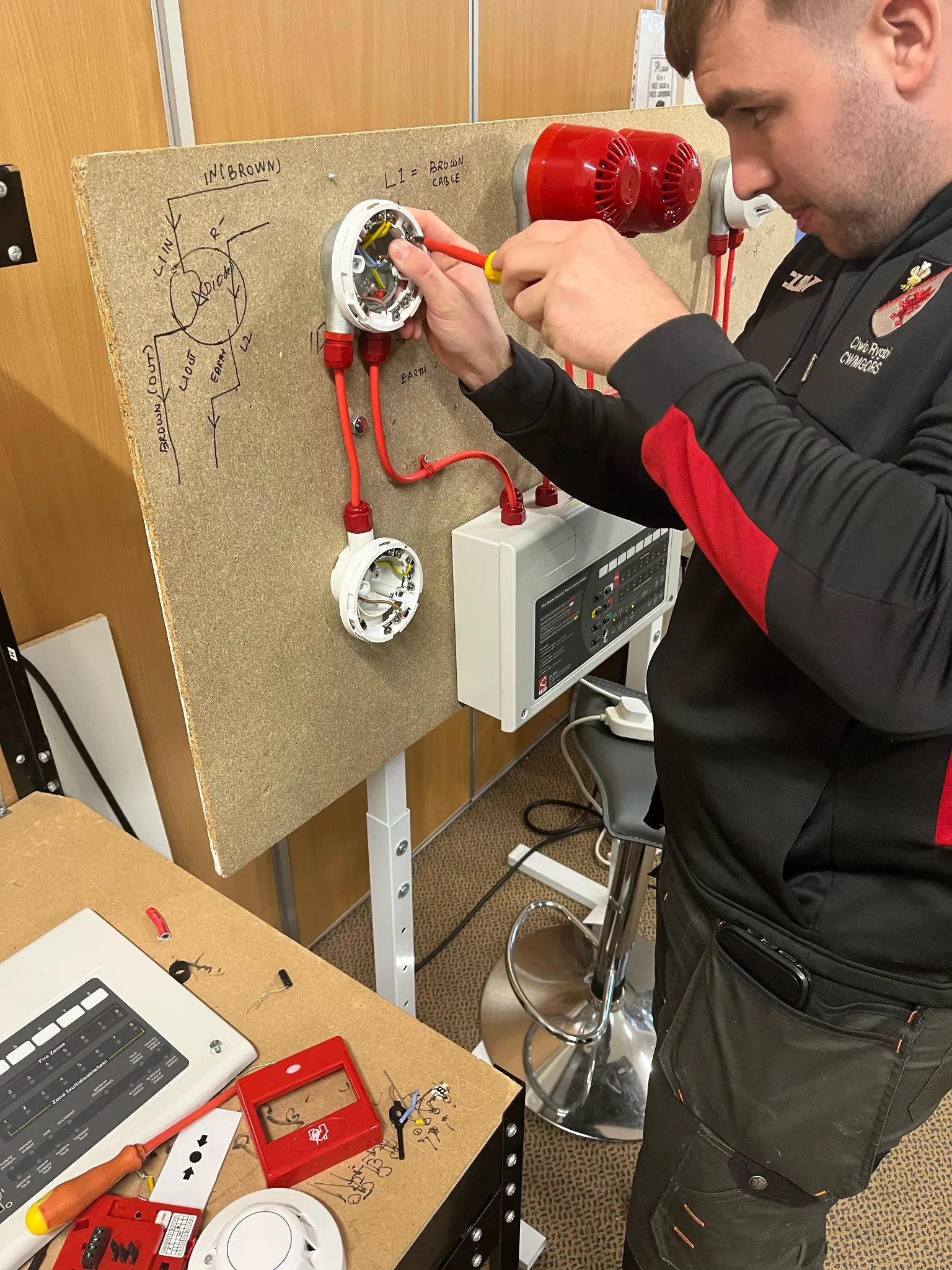
This qualification is ideal for:
Apprentices starting their career in the fire and security industry.
Existing practitioners who require a formal qualification to facilitate career progression.
Mature candidates via the Experienced Worker Assessment (EWA) route who have five years of experience and wish to achieve FESS Technician status.
To achieve this qualification, learners must complete eight units (seven mandatory units plus at least one optional unit). The curriculum covers:
Health and safety within the workplace.
Effective communication with others.
Preparing for installation and installing cabling.
Specialist Pathways: Design, installation, testing, commissioning, maintenance, and auditing of either Fire Detection systems or Security systems (CCTV, Intruder, and Access Control).
Assessment: Achievement is based on a Portfolio of Evidence created from real-world workplace tasks.
This qualification is aligned with the National Occupational Standards (NOS). Successful completion of the Fire pathway via the EWA route entitles individuals to apply for the ECS Gold Card, recognizing them as a qualified FESS Technician.
Graduates can progress into senior technical roles, system design, or management within the fire and security sectors. Because the qualification is unit-based, learners who do not complete the full diploma can still receive a Certificate of Unit Credit for the components they have mastered.
Learners may also be interested in the following specialized EAL awards:
EAL Level 3 Award in the Servicing and Maintenance of Portable Fire Extinguishers. Click here
EAL Level 3 Award in the Requirements for Fire Detection and Alarm Systems in Dwellings.Click here
EAL Level 3 Award in the Design, Installation and Maintenance of Emergency Lighting Systems. Click here
EAL Level 3 Award in the Requirements of Fire Detection and Fire Alarm Systems for Buildings BS 5839-1:2025. Click here
Course Structure
TheEAL Level 3 Diploma in Providing Electronic Fire and Security Systems has been designed with two pathways. To achieve the EAL Level 3 NVQ Diploma, a candidate must complete a total of 8 units. Regardless of which pathway you choose (Fire or Security), the structure remains the same: you must pass all 7 Mandatory Units and then select at least 1 Optional Unit that matches your specific job role.
These units form the foundation of the qualification. They cover the core safety, communication, and technical skills needed for any electronic system installation.
For a seasoned engineer (someone with 5+ years of experience), the timeline is significantly shorter than it is for an apprentice, but it still depends on how quickly you can gather your evidence.
Since you already have the skills, you aren't "learning" from scratch; you are simply documenting what you already do.
While the "Total Qualification Time" is listed as 510 hours, a seasoned engineer can usually finish the portfolio and observations in 3 to 6 months.
These units form the foundation of the qualification. They cover the core safety, communication, and technical skills needed for any electronic system installation.
Reducing risks and following safety legislation on-site.
While the unit titles above are the same for both pathways, your Portfolio of Evidence must reflect your specific discipline.
Pathway 1: Fire Detection and Alarm SystemsAll 8 units must be completed using evidence from Fire Alarm installations (e.g., smoke detectors, control panels, sounders).
Pathway 2: Security SystemsAll 8 units must be completed using evidence from Security installations (e.g., Intruder Alarms, CCTV, or Access Control).
You must choose at least one unit from the list below. To make it easier to pass, you should pick the one that most closely matches what you actually do at work every day.
QFES3/008: Auditing of systems.
QFES3/009: Protecting from the risk of violence at work.
QFES3/010: Working with other agencies (e.g., Police or Fire Brigade).
QFES3/011: Controlling contract work.
QFES3/012: Implementing works to meet installation requirements.
QFES3/013: Providing leadership for your team (Supervisor role).
QFES3/014: Surveying sites to prepare specifications.
QFES3/015: Preparing quotations (Sales/Estimating).
QFES3/016: Negotiating sales of systems.
QFES3/017: Managing your own resources and development.
QFES3/018: Developing working relationships with stakeholders.
QFES3/019: Planning the installation of systems.
Pro Tip: Most engineers on-site choose QFES3/019 (Planning the installation) or QFES3/012 (Implementing works) as their optional unit, as these naturally happen during a standard installation job.
Disclaimer: ECS Gold Card eligibility requirements are defined by external governing bodies and are subject to change. While we provide guidance based on current regulations, we encourage all learners to verify the latest certification standards on the official ECS website. LFS is not responsible for changes made to national industry requirements.
Nominated Lead Individuals under the BAFE SP203-1 Scheme must hold a Level 3 (or higher) regulated qualification. As a minimum, this qualification should cover the fundamental knowledge and skills relevant to the individual’s specific area(s) of responsibility—whether that be design, installation, commissioning/handover, and/or maintenance of fire detection and alarm systems in accordance with BS 5839-1.
A seven-judge panel of the Supreme Court has delivered its judgment in URS Corporation Ltd v BDW Trading Ltd. . This landmark ruling marks the first occasion on which the Court has examined the Building Safety Act 2022—introduced in response to the building safety crisis following the 2017 Grenfell Tower fire—as well as the Defective Premises Act 1972
LEARN MORE →
Cube Training has launched LFS (London Fire & Security Training) as part of its commitment to raising industry standards in fire and security system installation across the UK. LFS will provide high-quality training and expert consultancy services, backed by over 15 years of experience in the sector. The new initiative aims to elevate professionalism and ensure safer, more compliant installations nationwide.
LEARN MORE →