Success message
Error message

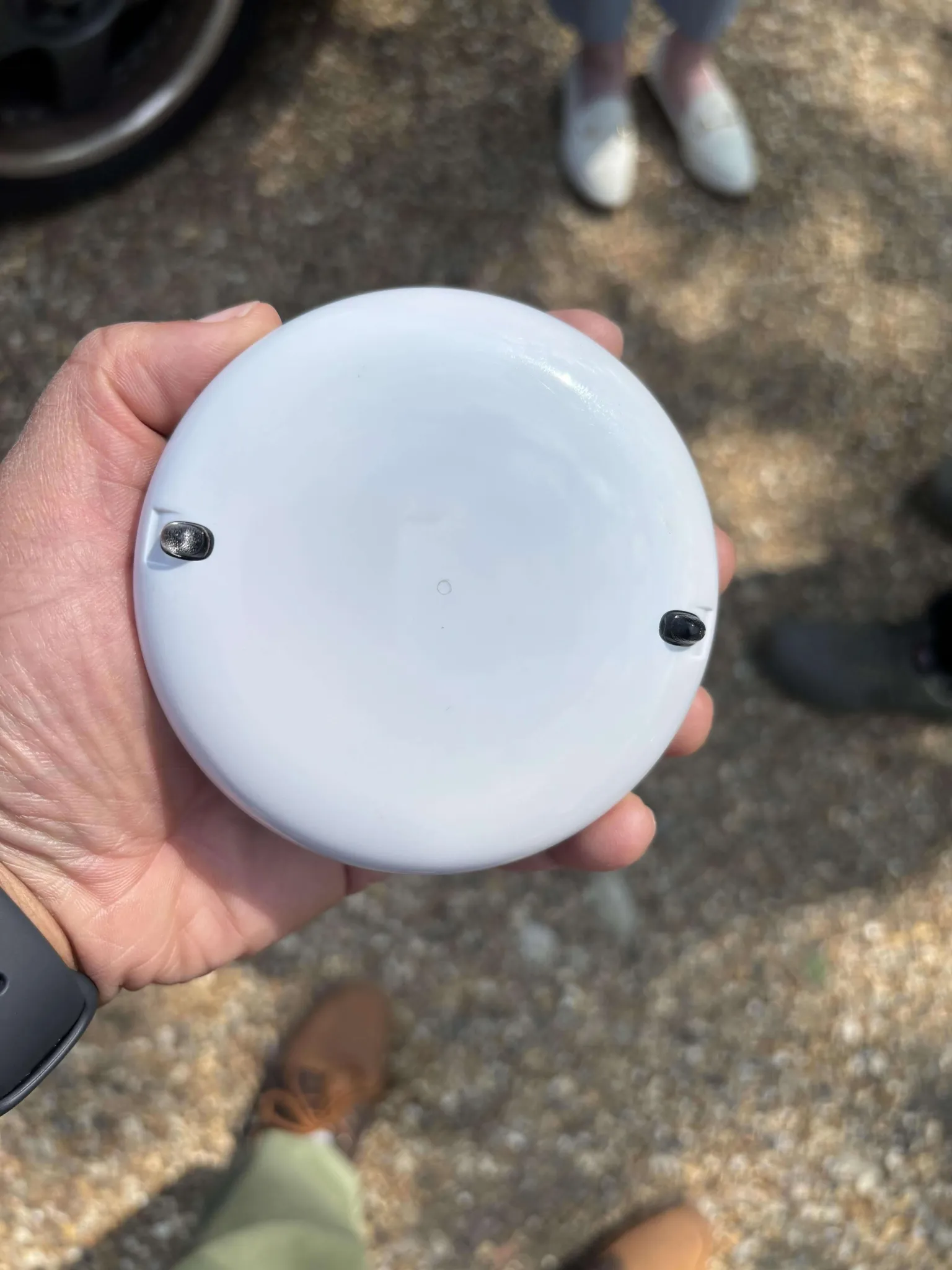
Wireless mesh networking in fire detection replaces (or hybridises with) conventional loop wiring by giving each field device radio transceiver capability. Modern systems are engineered to meet fire-safety reliability requirements (EN54-25 in Europe and equivalent national requirements), and they adopt mesh topologies because mesh properties (multi-hop routing, bidirectional comms and self-healing) closely match the reliability needs of life-safety systems.
Node = device:each detector, call point, sounder or module is a transceiver (a node) capable of sending and receiving messages. Nodes form radio links with neighbours; links are bidirectional so the panel can poll/supervise devices and devices can acknowledge commands.
Multi-hop & routing: messages can hop via intermediate nodes to reach the panel (translator/hub). The network builds multiple alternative paths so communications survive the loss of one node or a local radio fade. This is the “self-healing” property of mesh networks.
Expanders / translators / hubs: many commercial fire mesh systems use a wired translator or a wireless expander node to extend scale and capacity — the translator is the gateway to the fire panel loop; expanders increase reach and create more redundant paths. Some vendors expose “hub & cluster” or “translator + expander” architectures.
Bidirectional supervision: panels continuously supervise battery, radio link health and device status by polling or periodic heartbeats; loss of expected responses produces faults/failures in the panel. This is mandatory for life-safety systems.
Regulatory & spectrum choices: fire wireless systems use regulated sub-GHz SRD (Short Range Device) bands (e.g., 868–870 MHz in Europe) for longer range and better wall penetration than 2.4 GHz. Products must also meet radio EMC and SRD standards (ETSI EN 300 220 family) and EN54-25 testing for wireless fire device performance.
Key performance and safety attributes: Redundancy & reliability: mesh networks provide multiple radio paths; many systems actively select and test best paths during commissioning. Expanders/repeaters are used where topology or building geometry requires it.
Latency & determinism: fire alarm events must reach the control panel rapidly. Mesh protocols for fire use small, deterministic frames, priority for alarm messages, and engineered hop counts to guarantee worst-case latency within requirements (and EN54-25 acceptance).
Power & battery life: detectors are battery powered; radios and duty cycles are optimised (sleep schedules, short bursts for alarm/ack) to achieve multi-year battery life. Systems supervise battery level and report impending replacement.
Security: life-safety wireless typically includes link-level encryption (AES or equivalent) and device authentication to protect against accidental interference and intentional tampering; vendors vary in their exact algorithms and key management. Check product datasheets for encryption details.
Approach: EMS offers wireless products under the FireCell / SmartCell names. Their marketed architecture uses a
Hub & Cluster model and “patented” radio infrastructure intended to guarantee coverage and signal levels across a site. SmartCell is positioned as a compact system for smaller sites with options for remote diagnostics/communications.
Mesh behaviour: EMS’s literature emphasises engineered clusters (hub + clusters) that create robust radio coverage and multiple paths — effectively a managed mesh that maximises link quality. The system is EN54-25 certified according to the product literature.
Notes: EMS focuses on easy commissioning for smaller installations, remote access and diagnostics, and claims “secure wireless” in its materials. For detailed encryption/key management read the SmartCell/FireCell technical datasheet supplied with the product.
Approach: Ekho is a hybrid wireless family designed to integrate directly into Hochiki’s ESP wired loop. A wired Translator (hard-wired to the loop) is the gateway; Expander modules extend the mesh’s reach and capacity. Ekho runs in 868 MHz in Europe (and other bands regionally).
Mesh behaviour: Ekho is explicitly described as a self-configuring mesh — devices and expanders cooperate to create redundant routes back to the translator. Hochiki emphasises the ability to add expanders to increase reach and device capacity.
Key features: hybrid integration with ESP panels (so wireless devices appear to the panel as addressable loop devices), expanders for range, and long battery life claims in marketing material. Ekho is designed for installers used to wired ESP systems who want wireless flexibility while keeping the central panel unchanged.
Approach: Hyfire’s Taurus platform is a modern EN54-25 wireless/hybrid system built around a Translator + Mesh Expanders model called SafePath Mesh Expander Technology. Each translator supports a set number of expanders and devices; expanders provide redundancy and can extend network range significantly.
Mesh behaviour: Taurus identifies and automatically tests multiple redundant communication paths during commissioning. If an expander or link fails, the system reroutes to keep messages flowing — a classic industrial mesh design tuned for life-safety.
Key features: EN54-25 compliant product family, focus on easy commissioning, and tools to optimise path selection. Hyfire emphasises high availability and capacity for commercial retrofit installs.
Approach: Morley-IAS (part of Honeywell) provides wireless platforms described as robust mesh systems (e.g., Agile™, Morley Wireless). Their datasheets state bidirectional mesh communication , multiple communication paths to each device, and EN54-25 compliance in some product families.
Mesh behaviour: Morley’s systems use each RF device as a transceiver (receive & transmit), minimising repeater use. The manual explains networks where every device can forward messages, creating a self-healing mesh that allows path optimisation and redundancy. Some product material also documents AES encryption usage and regular polling/supervision intervals.
Key features: multi-path validation, bidirectional comms, radio channel management (multiple RF channels / frequency hopping options in some families) and manufacturer tools for commissioning and diagnostics.
These patterns appear across vendors and are helpful for system designers/specifiers.
Site survey & RF mapping — do a full site attenuation survey before finalising device locations. Radio propagation through walls, lift shafts and plantrooms is highly site-dependent; vendors often provide planning tools and site survey apps.
Use expanders/translators where topology requires — don’t rely on “line of sight” vendor claims; place expanders at strategic points (stairwells, plantrooms) to create redundant paths and reduce hop count.
Commissioning & path testing — modern systems automatically discover paths but commissioning tools should verify worst-case latency, RSSI margins and battery margins. Vendors usually supply software for this.
Supervision intervals & battery strategy — ensure supervision (poll) intervals and battery replacement schedules meet local codes and the vendor’s stated battery life. Plan for accessible device bases for easy replacements.
Security & interference management — check vendor encryption and frequency-management details (e.g., AES, channel hopping) and ensure systems are installed to minimise co-channel interference (avoid clustering with other SRD installations).
Scale model: EMS (Hub & Cluster) for small/medium installations; Hyfire & Hochiki (translator + expanders) for scalable hybrid systems; Morley (device mesh) for tight integration with existing Morley protocols.
Commissioning tools: Hyfire and Hochiki emphasise automatic path optimisation and tools; Morley and EMS provide commissioning support and supervision features in their product suites.
Standards & compliance: All four vendors market EN54-25 compliance or align to EN54 family test regimes for wireless fire detection (confirm the exact model and certificate). Always request the manufacturer’s EN54-25 certificate for the specific product/version you intend to use.
EN54-25 certification and the scope (which device types, firmware revision).
Operating frequency and allowed regional band (868 MHz for EU, note 916/920 MHz for other regions).
Mesh topology description: how many hops allowed, expanders supported per translator, max devices per translator/loop.
Encryption and authentication (AES, key provisioning/management). Supervision/poll interval and expected battery life at specified poll settings.
Do a propagation/site attenuation survey with vendor tools.
Plan expanders/translator locations to produce at least two independent radio paths from every protected point.
Configure device polling & alarm priorities according to local code and vendor guidance.
Record firmware versions and EN54-25 certificate numbers.
Test battery replacement process and verify remote diagnostics/alerts work end-to-end. Wireless mesh is now a mature option for many fire detection installations — when properly designed, commissioned and certified it gives comparable reliability to wired loop systems with much lower installation disruption. However, because implementations vary (translator-centric vs fully distributed meshes, encryption/key management, capacity limits), you should always request model-specific datasheets, EN54-25 certificates and commissioning tools from the vendor before specifying.
Take Your Fire Alarm Knowledge to the Next Level Enroll in our EAL Level 3 Fire Alarm Courses at LFS and gain the skills you need to design, install, commission, and maintain fire detection systems with confidence.
👉 For more information about our courses — and to download a FREE Wireless Commissioning Worksheet — simply subscribe to our newsletter below. Stay updated with the latest training opportunities, industry insights, and exclusive resources.
Subscribe Now to Access Your Free Worksheet
Our EAL Level 3 Fire Alarm Courses at LFS are designed to give you the technical expertise to design, install, and commission fire detection systems.
Subscribe to our newsletter to:
✅ Get full course details ✅ Stay updated on new training dates ✅ Download your FREE Wireless Commissioning Worksheet